A number of man-made masterpieces, including the Egyptian pyramids and Michelangelo’s painting of the ceiling of the Sistine Chapel, were made possible by the use of scaffolds. A scaffold is a temporary structure used to elevate people to a higher place in order to work. Drive by any number of structures being built or refurbished, and there’s a good chance you’ll see scaffolding supporting people to work at greater heights. Scaffolds range from the relatively simple ones used to work on a home project to the grander versions for assisting projects as important as enhancements to the Statue of Liberty.
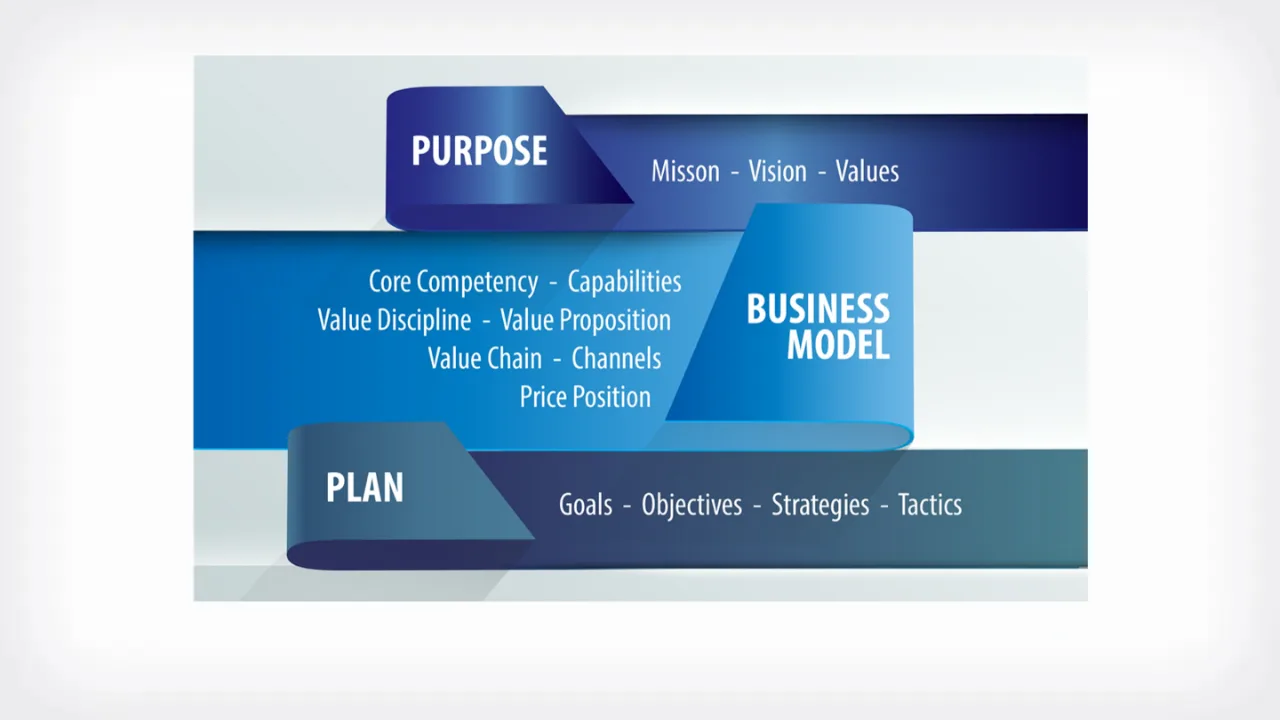
The Strategy Scaffold provides leaders with a one-page tool to build, adjust, and communicate the foundational elements of the business. A crucial part of the leader’s strategic skill set is to be able to clearly and concisely convey the essence of the business. A study of 1,000 global companies confirmed this importance as the researchers concluded: “The only competency viewed as essential for CEOs, COOs, and CFOs alike was developing an accurate and comprehensive overview of the business.”
The Strategy Scaffold provides leaders with the framework to see how the foundational elements of their business connect and support one another. It also can illuminate cracks in the foundation of the business, which if left unnoticed, could lead to its eventual collapse. The Strategy Scaffold consists of the following three planks:
1. Purpose:
The intent of the business represented by the following elements:
Mission: Current purpose; clear, concise, and enduring statement of the reasons for an organization’s existence today
Vision: Future purpose; provides a mental picture of the aspirations an organization is working toward
Values: Guide purpose; ideals and principles that influence the thoughts and actions of an organization, and define its character
2. Business Model:
A structural description of how the organization creates, delivers, and captures value.
CREATE
Core Competency: Primary area of expertise (what you know)
Capabilities: Activities performed with key resources (what you do)
Value Proposition: Rationale for the offering (customer, need/ job, approach, benefit)
DELIVER
Value Chain: Configuration of capabilities to provide value (how you do it)
Channels: Customer access points for offerings (where you offer it)
CAPTURE
Price Position: Amount customers pay for the offering relative to alternative options (low, moderate, premium)
3. Plan:
The strategic direction of the business translated into activities. The plan includes the following four basic elements:
Goals: What you are trying to achieve (general)
Objectives: What you are trying achieve (specific)
Strategy: How you will achieve the goals/objectives (general)
Tactics: How you will achieve the goals/objectives (specific)
Plans may also include a situational analysis, description of target customers and needs, competitive landscape, organizational assessment and milestones with appropriate metrics. The key is to ensure the plan is concise enough to actually be used and updated on a daily basis and not get stuffed on a shelf.
Failure to use a framework such as the Strategy Scaffold results in a game of strategy pick-up sticks. Unable to escape the whirlwind of daily activities, managers annually throw together a strategic planning session comprised of a series of random questions and a SWOT analysis, for good measure. With no rationale as to sequencing or practical application, this jumble of jargon and templates masquerades as a strategic plan. The entire process leaves everyone with a frustrated, unfulfilled sense of having done little new thinking that generated no real changes in the business.
A common maple seed, like those you tossed up into the air as a kid and then watched as they spun to the ground, uses the same principle of autorotation as a helicopter does when it descends. In fact, single-engine helicopters are designed with this autorotation principle in mind so they can flutter to the ground safely in the event of engine failure. The maple seed’s illustration of the principle behind helicopter flight is just one example of how something complex can be made simple. Leonardo da Vinci, whose design of the aerial screw inspired the future development of the helicopter said, “Simplicity is the ultimate sophistication.”
Great strategy should be simple, but don’t mistake simple for easy. The great artists, athletes, engineers and performers continually develop their craft. Does your team allow for the “we’re too busy” excuse to exempt them from the hard work of making trade-offs in order to strategically focus on a few key areas that will win the day? Does time to think and discuss strategic issues get extinguished by a reactionary firefighting mentality? Does your team universally understand their purpose, business model and plan? The Strategy Scaffold provides a concise framework to help your team elevate their thinking and gain a clear understanding of the foundational elements of the business.
Which of the three planks of the Strategy Scaffold is in the most need of strengthening for your team?